
For Susie Williams’ Family, The Annual Push Up Challenge Has Become a Deeply Personal Tradition
Across Australia, thousands of people will soon begin dropping to the floor each day to complete a set of push-ups — not just for fitness, but for something far more important.
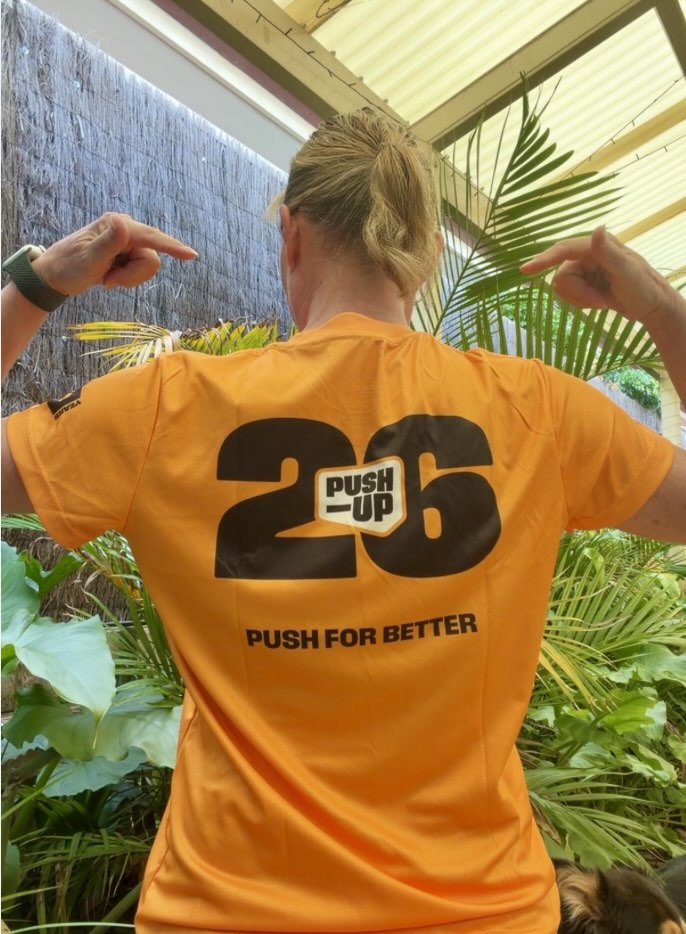
The Push-Up Challenge has become one of Australia’s largest mental health and fitness events, encouraging participants to complete thousands of push-ups across 23 days while learning about mental health and raising funds for support services.
The challenge has struck a chord with communities across the country because it combines physical activity with open conversations around mental health — conversations that many Australians say are still desperately needed.
For Fleurieu Peninsula local and Coast Lines publisher Susie Williams, the challenge has become deeply personal.
“Every year our family takes part in The Push-Up Challenge.
“It keeps us strong and fit, but more importantly it raises conversations about mental health and suicide. Every day we are given statistics, thought-provoking information and questions when we log our push-ups — and every time it sparks conversations in our family.”
Education, Fundrasing and Connection
The challenge was founded in 2017 and has grown rapidly, with hundreds of thousands of Australians now taking part annually. Participants complete a set number of push-ups linked to current mental health statistics, with the aim of educating people while encouraging fundraising and connection.

This year’s challenge again aims to encourage Australians to check in with one another, reduce stigma around mental illness and promote healthier conversations in homes, schools, sporting clubs and workplaces.
According to information shared through the challenge, more than 3,300 Australians die by suicide every year — around nine people every day. Tens of thousands more attempt suicide annually.
For Many Participants, The Numbers Are Not Just Statistics
Susie says her family’s understanding of mental health challenges changed dramatically almost six years ago when both her brother and her teenage daughter experienced significant mental health struggles at the same time.
“Almost six years ago, my brother tried to take his own life and at the same time we had a teenage daughter who did not want to live. Our family was in a constant state of stress and at a loss as to what to do.”
She describes the period as one of the most isolating and frightening times of her life.
“I used to sleep on the floor of our daughter’s room night after night because we were scared something bad might happen.
“We were stuck on long waiting lists for psychological help and were told the quickest way to get support was to present to the emergency department at hospital. What kind of system is that?”
South Australian Farming Communities Touched By Suicide
As for many regional families, accessing timely mental health support proved difficult.
“What we learnt was that by the time a person or family asks for help, they probably needed it months before.
“And from the moment you ask, the wait can still be very long. You worry that by the time help finally arrives it might be too late.”
While both her brother and daughter are now in a much better place, Susie says the experience changes a family forever.
“It’s a bit like a cancer diagnosis. The stress and worry that it could return never completely leaves you.”
Sadly, mental health struggles and suicide have touched many regional families over generations.
Susie says growing up in a remote South Australian farming community meant suicide was something her community was not immune from.
“In the past both my husband and I have lost friends and relatives to suicide.
“Growing up in a remote farming community also meant we were not untouched by this reality as children either. But the true impact of those losses didn’t fully register until we faced our own struggles as adults and parents.”
You Don’t Have To Be a Push-Up Pro
Mental health organisations say this openness is exactly why campaigns such as The Push-Up Challenge matter.
By combining exercise, education and conversation, the challenge creates simple daily opportunities for people to talk about difficult topics in a less intimidating way. Schools, workplaces, sporting teams and families often participate together, creating support networks and shared accountability.
Participants can choose their own push-up goals, modify exercises to suit their abilities or even complete alternative activities such as sit-ups, squats or walking.
Importantly, organisers stress that the challenge is not about athletic ability or competition — it is about connection.
For many families, the daily commitment becomes less about counting repetitions and more about creating moments to check in with each other.
Susie says that is why her family continues to participate each year.
“So if this is the one thing I can do every year, with my family by my side, then we hope one conversation will lead to another and maybe — just maybe — make a difference or prevent tragedy for someone else’s loved one.”
As awareness around mental health continues to grow, many Australians are recognising that support is not only needed in moments of crisis, but in the everyday conversations that happen beforehand.
And sometimes, those conversations begin with something as simple as dropping to the floor and doing a push-up together.
Donate HERE
To find out more about the impact of your donation or to learn about participating in The Push-Up Challenge, visit www.thepushupchallenge.com.au